Your Cart is Empty!

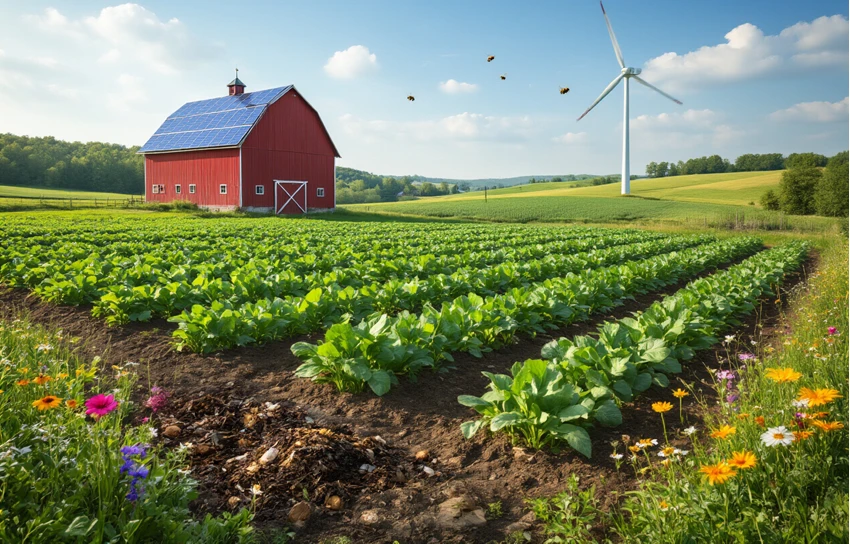
Organic farming enhances soil health, improving over time through composting, cover crops, and crop rotation. This fosters beneficial microorganisms, unlike synthetic chemicals that deplete soil. Organic soils have more beneficial bacteria/fungi, boosting nutrient absorption. Cover crops prevent erosion and add nitrogen. Compost provides steady nutrients, avoiding synthetic fertilizer's degradation. Organic fields lose less topsoil, protecting resources. Organic farming protects water by eliminating synthetic pesticides/fertilizers, reducing groundwater nitrate levels. Healthy soils absorb rainfall, reducing runoff. Buffer strips catch sediment. Improved soil structure reduces irrigation needs. Organic farming combats climate change by storing carbon in soil. It uses less energy by avoiding synthetic fertilizers. Diverse systems are more resilient to extreme weather. Organic farms boost biodiversity, supporting more species and benefiting pollinators like bees. They connect habitats, aiding genetic diversity.


 english